In the Magdalen Islands, each island has its own colour, rhythm and landscapes. Some invite you to walk between dunes and cliffs, while others are perfect for lingering in cafés, watching fishing boats or taking the road without rushing.
Exploring the archipelago one island at a time is a wonderful way to better understand the unique character of each area, vary your discoveries and spread your travels across the territory. Rather than trying to see everything in one day, take the time to discover the Islands by sector, at the rhythm of the sea, the wind and local encounters.
To get a better sense of the archipelago, visit the Les Îles One by One page.
The archipelago is made up of about a dozen islands, six of which are connected by sand dunes and Route 199: Havre Aubert Island, Cap aux Meules Island, Havre aux Maisons Island, Pointe aux Loups Island, Grosse Île Island and Grande Entrée Island.
Entry Island is also inhabited, but is accessible only by sea. Other islands and islets complete the maritime landscape, including Brion Island, Rocher aux Oiseaux and Corps Mort.
The answer depends on what you want to experience: heritage, beaches, nature, fishing, local flavours, wide-open spaces or colourful villages. Ideally, don't choose just one island. Instead, discover each area at its own pace.
At the southern end of the archipelago, Havre Aubert Island is known for its heritage, cultural atmosphere and wooded landscapes.
The historic site of La Grave is a must-see for walking, shopping, enjoying a coffee, visiting galleries or simply taking in the atmosphere. The island is also appreciated for its sunsets, quiet roads and walking areas.
Things to discover: La Grave, the Demoiselles, Chemin du Bassin, the beaches, cafés, boutiques and great places to eat.
Cap aux Meules Island includes the villages of Cap-aux-Meules, L'Étang-du-Nord and Fatima. It is often visitors' first contact with the Islands, especially for those arriving by ferry.
Here, you will find many services, shops, restaurants, harbours, beaches and viewpoints. It is also a good starting point to understand the layout of the territory and plan your travels.
Things to discover: the harbour of Cap-aux-Meules, L'Étang-du-Nord, cliffs, beaches, cafés, restaurants and scenic stops.
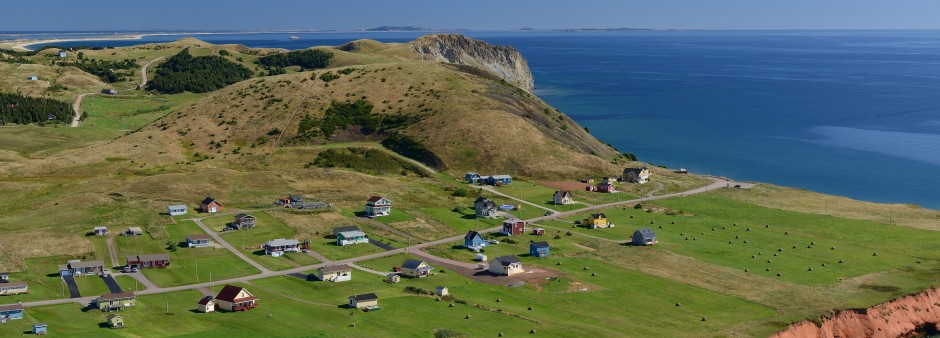
Havre aux Maisons Island charms visitors with its colourful houses, winding roads, red cliffs and open landscapes.
It is the perfect island to slow down, take photos, stop at a cheese shop, discover local flavours or admire the sea from a viewpoint.
Things to discover: colourful houses, Cap Alright, Dune du Sud, scenic roads, cafés, gourmet stops and pastoral landscapes.
To extend the experience, explore the Food Trail.
Pointe aux Loups Island is small, but unforgettable. Surrounded by long beaches and dunes, it gives the impression of being between two seas.
This is an ideal area to admire the scenery, walk on the beach and feel the vastness of the archipelago. Since dunes are fragile environments, it is important to use designated access points and stay on marked trails.
Things to discover: long beaches, the small harbour, dunes, open landscapes and photo stops.
Grosse Île Island reveals another side of the archipelago, shaped by its anglophone community, fishing heritage and vast natural spaces.
Visitors come here for the landscapes, beaches, lagoons, peaceful atmosphere and local history. The Old Harry area and Grande Échouerie Beach are especially worth the detour.
Things to discover: Old Harry, Grande Échouerie Beach / Old Harry Beach, natural landscapes, places connected to fishing and the unique atmosphere of the eastern Islands.
At the eastern end of the archipelago, Grande Entrée Island is known as Québec's lobster capital.
The fishing harbour is at the heart of the village's identity. Here, you can observe the boats, maritime activity and the importance of fishing in Madelinot life. It is also a perfect area to feel that unique “end of the road” atmosphere.
Things to discover: the fishing harbour, lobster boats, Boudreau Island, Bassin aux Huîtres, seafood and open landscapes.
To learn more, visit the page on fisheries.
Entry Island is not connected by road. You get there by sea, then discover it mostly on foot.
With its hills, pastures, lighthouse, small church and views of the archipelago, Entry Island offers a completely different experience. Big Hill, the highest point in the Islands, provides an impressive panorama.
Things to discover: Big Hill, the lighthouse, hills, open landscapes, walking and the unique atmosphere of an inhabited island apart.
To plan your excursion, visit the Getting to Entry Island page.
To make the most of your stay, group your visits by sector instead of crossing the archipelago several times in the same day. You will spend less time on the road and more time exploring.
For example:
To plan your activities, visit the What to do, Where to eat, Where to sleep and Moving Around sections.
Discovering the Magdalen Islands one island at a time also means adopting a gentler pace. Distances may seem short, but the most memorable moments often happen when you agree to slow down: an unexpected stop, an almost empty beach, a conversation with an artisan, a lively wharf or the changing light throughout the day.
By spreading your visits across the archipelago, you also help reduce pressure on the most visited places and discover areas that may be less known, but just as memorable.
Before you go, take the time to read the tips for responsible and sustainable travel and the I care for Les Îles de la Madeleine initiative.
The main inhabited islands are Havre Aubert Island, Cap aux Meules Island, Havre aux Maisons Island, Pointe aux Loups Island, Grosse Île Island, Grande Entrée Island and Entry Island.
Six islands are connected by Route 199: Havre Aubert, Cap aux Meules, Havre aux Maisons, Pointe aux Loups, Grosse Île and Grande Entrée.
Cap aux Meules is often the first point of arrival, but Havre Aubert, Havre aux Maisons and Grande Entrée each offer a different atmosphere. The best approach is to plan your stay by sector.
Havre aux Maisons Island is especially known for its colourful houses, pastoral landscapes and scenic roads.
Grande Entrée is a must-visit area to discover the world of lobster fishing and the activity of fishing harbours.
Entry Island is accessible by sea. Once there, it is mostly discovered on foot. It is recommended to check schedules, weather and available services before leaving.
One week allows you to discover several areas without rushing. A longer stay lets you better enjoy the rhythm of the Islands, the beaches, activities and spontaneous discoveries.
Yes, but it requires good planning. Depending on the season and where you are staying, you can combine walking, cycling, public transportation, taxis, car rental or guided excursions.
Because each island has its own landscapes, villages, accents and attractions. This way of travelling helps spread visits across the territory, reduce pressure on the most popular places and create a richer experience.