
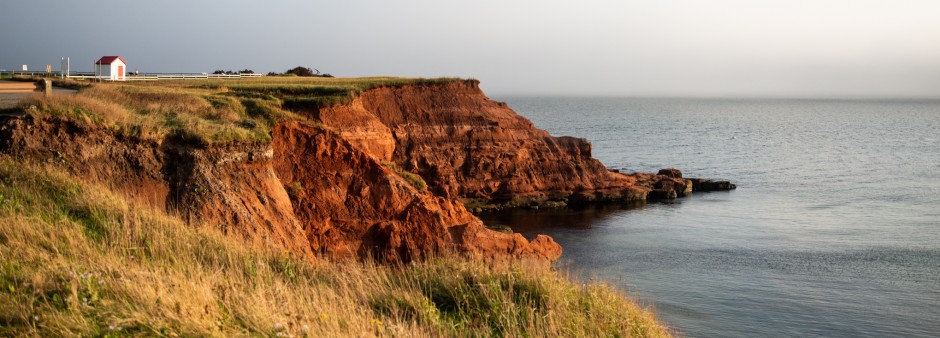
The Magdalen Islands are known for their stunning red cliffs, long sandy dunes, dramatic headlands and endless beaches. These iconic coastal landscapes are among the most remarkable in maritime Québec and attract thousands of visitors every year.
But the Islands are also a fragile environment constantly shaped by coastal erosion.
Under the effects of wind, waves, storms and climate change, the coastline is continuously evolving. Certain human behaviours can also accelerate erosion and further weaken the dunes and cliffs of the Magdalen Islands.
Walking too close to cliff edges, trampling dunes or carving into rock faces may seem harmless. Yet over time, these repeated actions have a real impact on the landscapes, ecosystems... and people's safety.
Erosion is a natural part of the Islands' evolution. Red sandstone cliffs and sandy dunes are especially vulnerable to storms and coastal movement.
Over the years:
Climate change, rising sea levels and increasingly powerful storms are all contributing to accelerated coastal erosion throughout the Magdalen Islands.
Headlands and cliffs offer spectacular viewpoints, but they can also present serious risks.
Ground near the edge may be unstable, cracked or weakened by erosion, even when it appears solid. Some sections can collapse without warning.
It is therefore essential to:
Even if some trails run along the cliffs, it is important to remember that many of these paths were created years ago, when the coastline was more stable. Erosion has since changed certain areas significantly.
Keeping your distance helps protect both your safety and these fragile natural environments.
The dunes play an essential role in maintaining the Islands' natural balance.
They help to:
Dune vegetation, including marram grass, helps keep the sand in place. When vegetation is trampled, wind can more easily move the sand and accelerate erosion.
Creating shortcuts to the beach or walking directly on dunes therefore weakens the entire ecosystem.
Simple actions can make a real difference in preserving the Islands:
The Islands' cliffs are not guest books. Preserving their natural beauty allows everyone to fully enjoy these breathtaking landscapes.
Visiting the Magdalen Islands also means helping protect an exceptional natural environment.
Choosing marked trails, using boardwalks and respecting fragile natural areas are simple actions that directly help slow coastal erosion and preserve these landscapes for future generations.
The beauty of the Islands also depends on the respect we show them.
By respecting trails, dunes and cliffs, everyone helps preserve what makes the Magdalen Islands so unique. This is the spirit behind I Care for Les Îles de la Madeleine: travelling consciously to help protect the Islands today and for generations to come.
Because the best souvenir you can leave behind is no trace at all.
Visitors are encouraged to use boardwalks and designated trails in order to protect the vegetation that stabilizes the sand and limits erosion.
Cliffs can be weakened by erosion and some sections may collapse without warning. Staying at least 3 metres away from the edge is recommended.
Dunes protect the coastline from storms, stabilize sand and provide habitat for important ecosystems in the Magdalen Islands.
Yes. Rising sea levels and increasingly intense storms contribute to accelerated coastal erosion throughout the Magdalen Islands.