
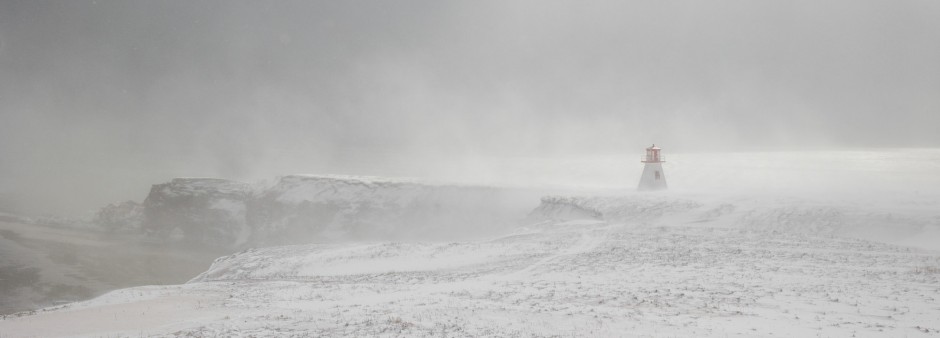
The Mi'kmaq people called the Magdalen Islands archipelago “Menagoesenog,” a word meaning “islands swept by the waves.” And where there are waves, there is inevitably wind. On the archipelago, there is no escaping it: the wind blows constantly. Whether it takes the form of a gentle breeze or a wind that feels as though it could tear your skin away, it is there—faithful, persistent, omnipresent, glorious.
On the Islands, windless days are extremely rare. When they do occur, they feel like a suspended moment, a pause, a breach in the flow of time. Let me be clear: I am not speaking of days when no breath of air brushes my face, but of a day when dune grasses refrain from dancing on the hummocks, a day when kites no longer trace the distant horizon, a day when, offshore, no whitecaps leap over the waves.
Let us imagine for a moment the Islands without wind: no more tousled hair swirling in every direction, no squinting eyes to keep sand, snow, or rain from slipping beneath our eyelids, no cold finding its way under our clothes. Suddenly, car doors would stop slamming shut on their own when the wind blows from just the right angle. Our houses would no longer tremble during autumn storms, and we could finally hang our door hinges on the proper side, as on the mainland, without fear of breaking interior walls—and no more straps would be needed to keep doors from crashing into cedar shingles. Depending on the wind's direction, breathing in or out would no longer require any effort. On rainy days, would we suddenly see umbrellas coloring the townships and villages, knowing that none withstand the Islands' wind for very long?
Would our bodies lose their bearings? Would we miss the whistling of the wind through our windows? Would our clothes no longer dance on our clotheslines? Would our landscape change? Would the stunted trees grow taller? Would we speak as much about coastal erosion?
To live on the Islands—or even to stay for just a few days—is to learn to love this wind, to play with it, and to adapt to its presence.
A few years ago, along the coast at Gros-Cap, in Cap-aux-Meules, I met a woman of Mexican origin. She told me she had to get used to the wind, as it caused her severe dizziness—almost as if a foreign body had suddenly entered her and needed to be expelled at all costs. I found it hard to believe that her body needed time to acclimate to these new sensations, brought on by something that, without wings, takes flight. That was when I understood that living here means having unconsciously absorbed the breath of the wind deep into our very flesh.
They say the sea flows through our veins. And I, a Madelinot of many generations, yet seasick on the water, would dare to say that it is rather the wind that blows through our veins.