True treasures of the Madelinot landscapes, the cliffs and dunes also provide protection for the archipelago. This coastal barrier, stretching for kilometers, plays a vital ecological role: it forms the first line of defense against erosion while safeguarding the underground freshwater table from saltwater contamination.
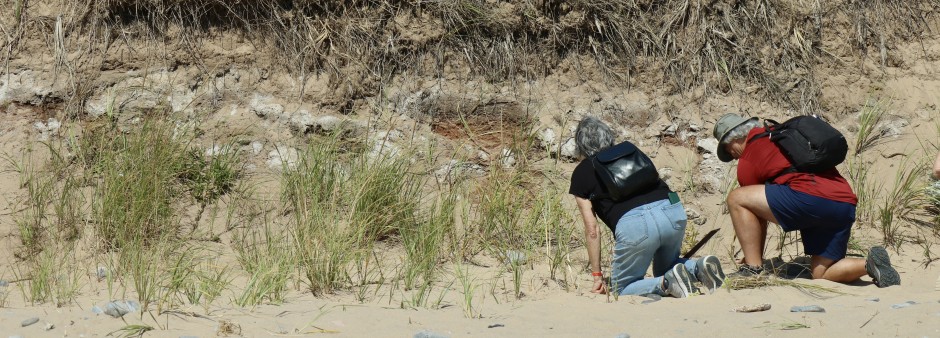
Erosion, a natural phenomenon caused by wind, waves, and rain gradually carrying away sand, is worsened by human presence. Simple actions can make all the difference in reducing our impact: staying on marked trails, limiting traffic, and above all... planting beachgrass (American beachgrass), a true living barrier against erosion!
To address this challenge, a new tourism model is emerging: regenerative tourism. Rather than simply minimizing impacts, this approach invites visitors to have a positive impact on the environment they are discovering...
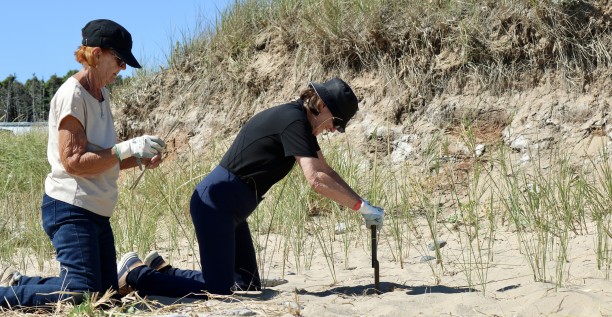 Throughout the summer, more than a hundred residents and visitors took part in planting activities to reinforce erosion-prone areas, helping restore dune habitats. Each blade of beachgrass planted thus becomes a symbol of commitment to the Islands—a concrete gesture that turns travelers into agents of change!
This new kind of tourism brings together the environment, the local community, and businesses around a common vision: leaving the land in better condition than when we arrived. By taking part in collective actions, supporting the local economy, or joining social and environmental projects, everyone can contribute to this virtuous cycle.
By planting beachgrass, we also root ourselves in ecological awareness, in the preservation of landscapes, and in a more respectful relationship with the territory. And what if this reconnection to nature, to others, and to oneself became the very essence of travel?
You leave the Islands transformed, with a desire to return and to continue to protect them!