There are three places worthy of special mention, either for their natural habitat or for their flora and fauna typical of the Îles de la Madeleine. Two sites are designated as reserves in the Islands: Île Brion and pointe de l'Est in Grosse Île. Rocher aux Oiseaux became a bird sanctuary in 1919.
![]() |
![]() |
||
![]() |
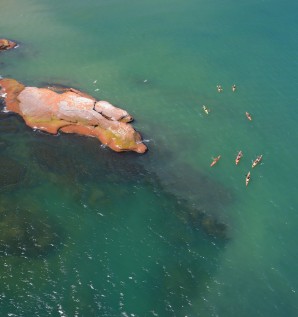
The Île-Brion Ecological Reserve is located 16 km off Grosse-Île. Several families occupied it for about a century, after which it was seasonally inhabited for fishing until the beginning of the 1970's. It is now deserted. This island has always been difficult to visit, especially on windy days, and the old wharf offers little protection for boats.
In 1984, the Government of Québec acquired the island for conservation purposes. It shelters a great diversity of species and represents the Islands as they used to be. Its forest, stunted by the climate, is home to more than 140 species of birds. The vegetation found here amazed both the explorer Jacques Cartier and the botanist Marie-Victorin.
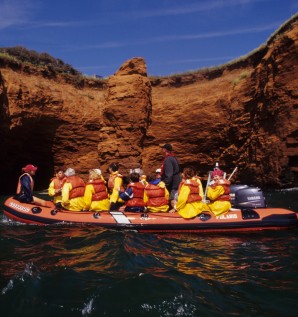
Visits and short stays for educational purposes may be authorised: conservation, observation, and exploring the natural habitat. Only a limited number of visitors are permitted on the island at a time. Nautical excursions are available, weather permitting. Confirmation for departure and schedule are available the day of departure only.
Reservations required with boat tour organizers.
Entry fees will be charged.
Module
![]() |
![]() |
||
![]() |
|||
| |
|||
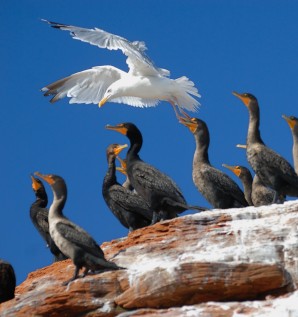
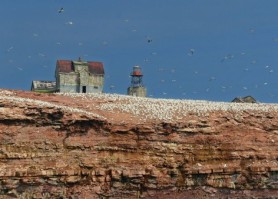
This high rocky islet is located 32-km northeast of Grosse-Île, in the middle of a shipping lane for vessels entering the Gulf of St-Lawrence. Access to this islet is difficult for visitors. It serves as a refuge for colonies of aquatic birds such as petrels, northern gannets, razorbills, murres and gulls. Even though the lighthouse, first lit in 1870, is now automated, the lightkeeper's house and other structures are still there. Even with its difficult access, this rock is one of the most important ornithology sites in the gulf of St-Lawrence. Nautical excursion are available.
![]() |
![]() |
||
![]() |
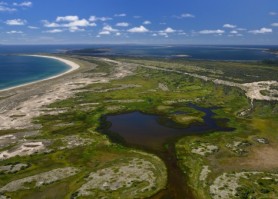
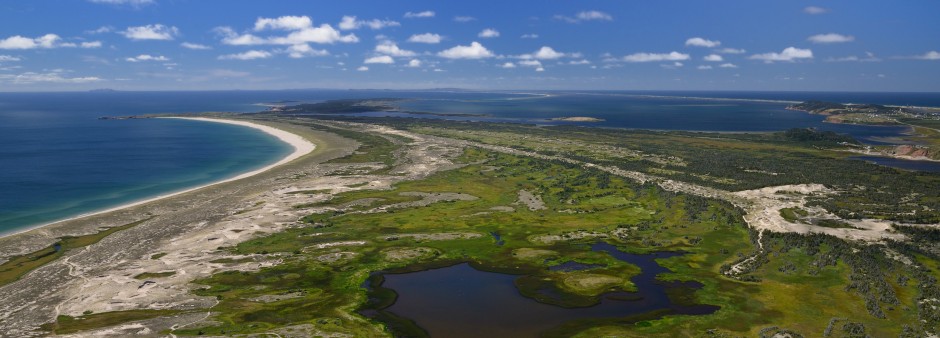
This National Wildlife Area situated in the region of Grosse-Île, is a vestige of the sole ecosystem of its kind in Québec. Its 684-hectare site brings together in whole or in part the typical elements of the archipelago's landscape. This territory is protected and administered by Environment Canada's Canadian Wildlife Service and is part of the network of eight national wildlife areas in Québec.
For many shorebirds and ducks, the reserve represents an essential stopping point in their yearly migrations. The presence of the piping plover and the horned grebe during the breeding period is one of the main justifications for protecting the Pointe-de-l'Est habitat, since these birds are on the list of endangered species.
For information, Canadian Wildlife Service, T: 418-648-7225..
To explore the Reserve, its vegetation so typical of the dune environment and its bird life, two nature interpretation trails are available: Les Marais Salés and L'Échouerie. These are accessible from route 199, after Grosse-Île and before Old-Harry. Access to the Reserve is free and trails can be walked alone or with a guided tour.
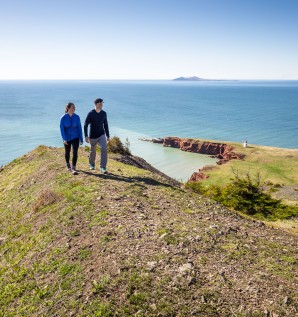
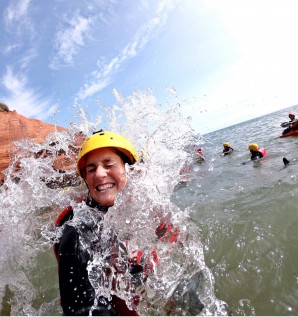
There are many other beautiful areas where you will enjoy walking tours or hikes. Outdoor activities providers offer guided interpretive tours with accredited guides.
-Ne pas effacer-
128 chemin principal, Cap-aux-Meules
Toll free: 1 877 624-4437
© 2001-2012 Tourisme Îles de la Madeleine